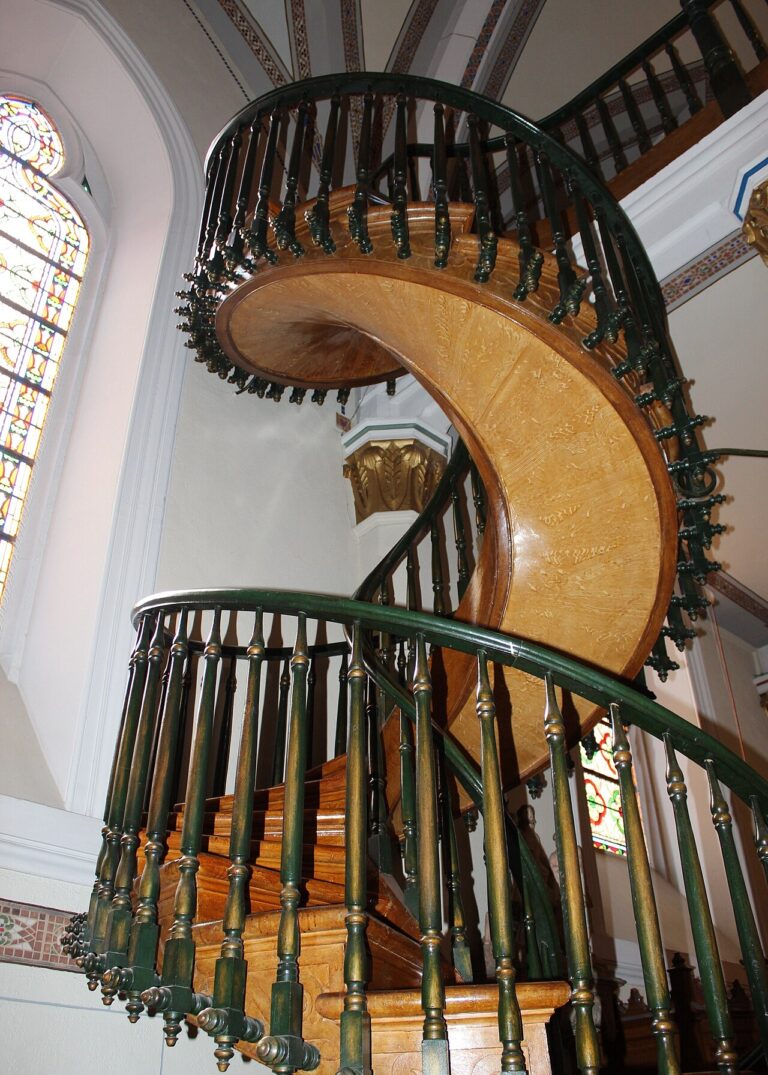
What Wood Is the Loretto Staircase Made Of? (Spruce, “Loretto Spruce,” and the Contested Origin)
- Sourced
- Facts vs legend
- Reviewed Nov 2026
Short answer: the staircase is made of spruce (genus Picea). Wood technologist Forrest N. Easley examined a sample in 1996 and found it did not match any catalogued spruce, so he proposed the name “Loretto Spruce” (Picea josefii). That species name is his suggestion, not an accepted classification. Claims that the wood is ash, walnut or an extinct tree are not supported.
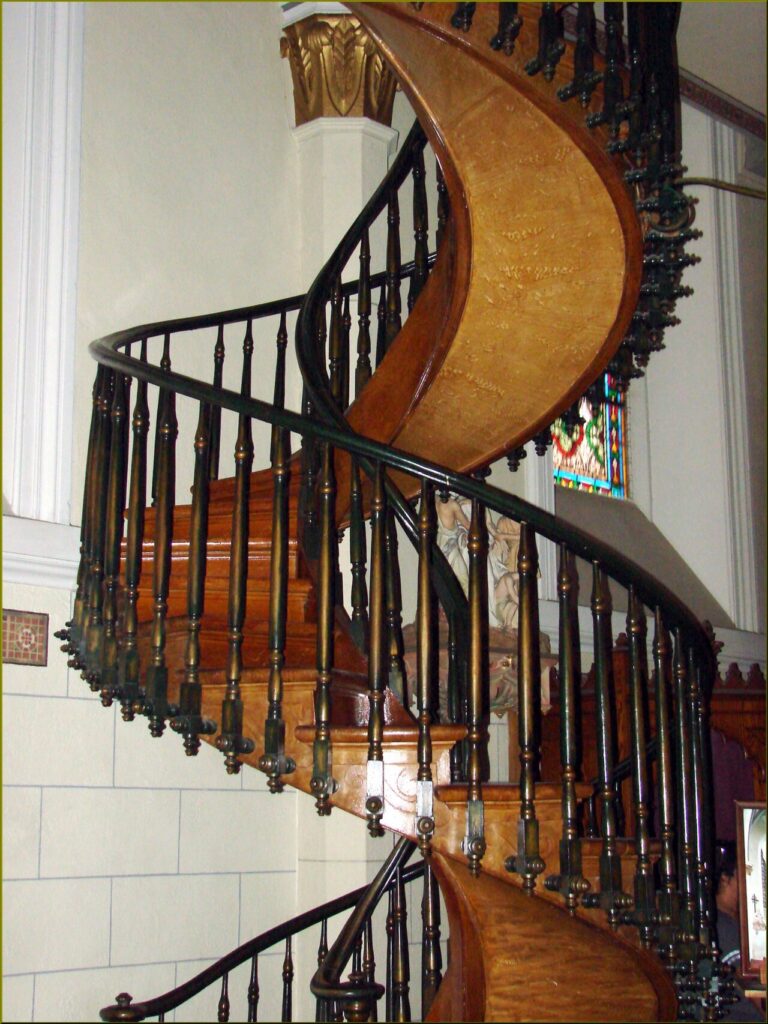
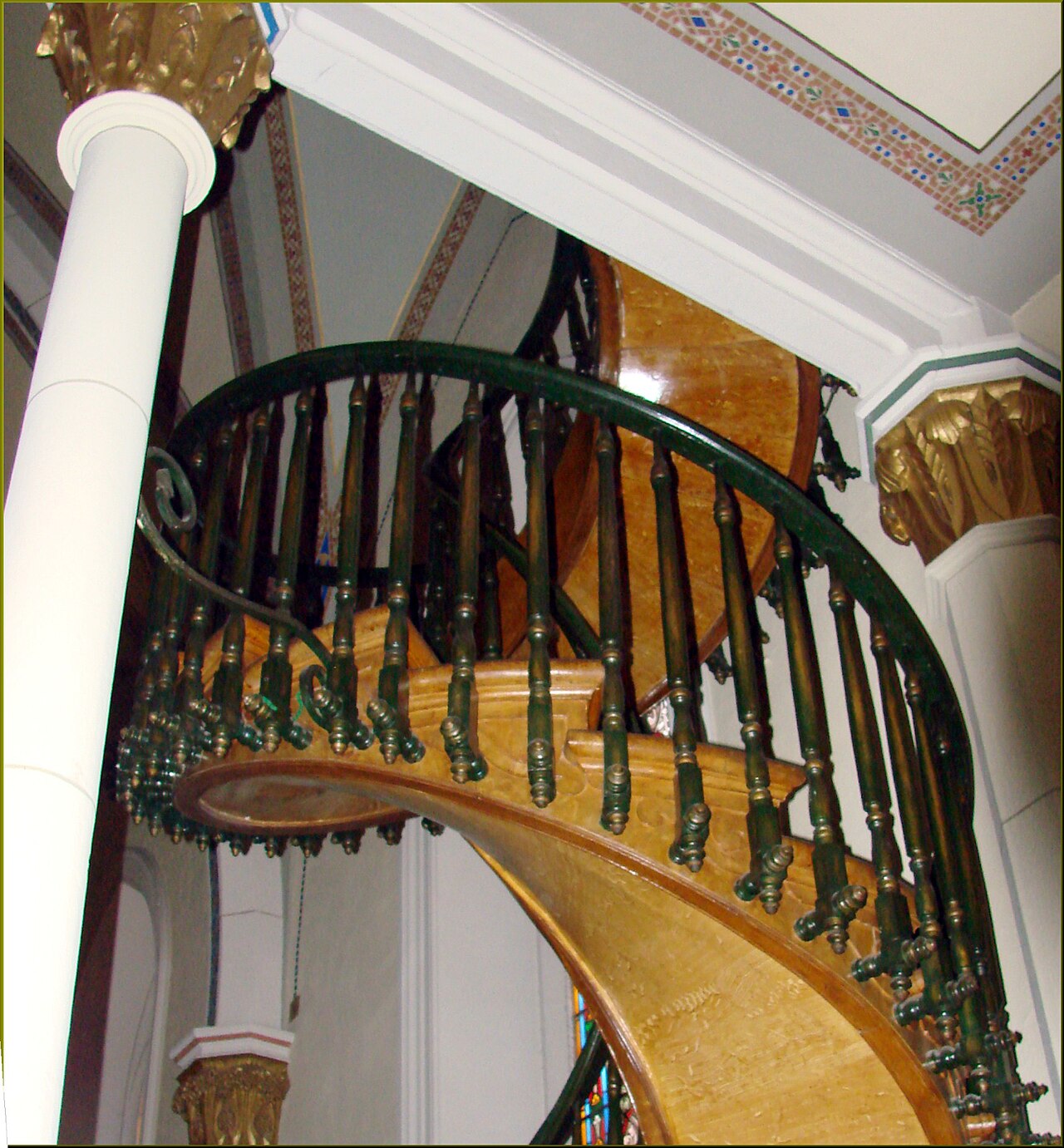
Photo above: a close view of the stringer and treads. Credit: inkknife_2000, CC BY-SA 2.0 via Wikimedia Commons.
The wood at a glance
- Genus
- Spruce (Picea)
- Wood type
- Non-porous softwood, no vessels
- Closest known species
- Between Sitka and Engelmann spruce (Easley)
- Proposed name
- “Loretto Spruce”, Picea josefii
- Sample
- One small piece from the upper inner stringer
- Origin
- Not recorded
Search for the wood of the Loretto staircase and you will find spruce, ash, fir, walnut and “an extinct species”, often stated with equal confidence. Only one of those rests on a documented analysis. This page sets out what that analysis found, what it did not find, and where the popular claims go wrong.
The answer: spruce (genus Picea)
The only published microscopic analysis identifies the wood to a single genus: Picea, the spruces, in the pine family (Pinaceae). It is a non-porous softwood with no vessels, which rules out hardwoods such as ash, oak or walnut. Wikipedia’s summary, citing Ben Radford (2014), also describes the wood as “a type of spruce” (Wikipedia: Loretto Chapel).
The genus is settled. The open question is the species.
Forrest Easley’s 1996 analysis
Forrest N. Easley, who signs his report as a forester and wood technologist, published his findings in a report dated 28 December 1996 (Easley, “Loretto Chapel Staircase Wood: Analysis and Technical Description”). The details matter, because most retellings leave them out:
- The sample: one small specimen, about three-quarters of an inch square and one-eighth of an inch thick, taken from the upper inner stringer near the choir-loft girder. It still carried a coat of white plaster.
- The method: a variable-power hand lens and a compound microscope at 50× to 450×, over about fifteen months, compared against university wood-identification texts from Colorado State University’s College of Forest Sciences.
- The genus: “only one genus” indicated, Picea.
- The species: no known species matched. He placed it between Sitka spruce (Picea sitchensis) and Engelmann spruce (Picea engelmannii).
- The name: he suggested the common name “Loretto Spruce” and the scientific name Picea josefii. The species name echoes the St. Joseph of the legend.
Two things the report does not say: it does not call the species extinct, and it does not claim the wood proves a miracle. It describes a “thus-far unnamed species” and calls the staircase beautiful and mysterious. In a separate paper two months later, “A Stairway from Heaven?”, Easley wrote that he did not doubt it is “truly a ‘miraculous’ staircase”, a view of faith rather than a finding of the analysis (see the Easley paradox). The fuller story of the proposed name is on Loretto Spruce (Picea josefii).
Every claim about the wood, checked
Established documented in a primary or official source · Disputed evidence exists but is contested · Legend / error tradition or claim with no support
| Claim | Status | What the record shows |
|---|---|---|
| It is spruce (Picea) | Established | Easley’s microscopic analysis; repeated in Wikipedia’s summary. |
| It is a new, unknown species of spruce | Disputed | Easley’s proposal from one sample; never formally described. |
| The species is extinct | Legend | Repeated in the chapel’s marketing (“an apparently extinct wood species”, quoted by Tim Carter); not in Easley’s report and not evidenced. |
| It is ash | Error | Ash (Fraxinus) is a ring-porous hardwood; the sample is a non-porous softwood. |
| It is fir or walnut | Error | Not supported by any analysis. Walnut is a hardwood. |
| The wood is not native to New Mexico | Disputed | Often repeated, but Easley’s closest match includes Engelmann spruce, which does grow in New Mexico’s mountains. |
Where did the wood come from?
No purchase or shipping record survives, so the origin is unknown. Three ideas circulate:
- France. Historian Mary J. Straw Cook suggested the probable builder, François-Jean Rochas, may have brought or shipped the wood from France. No record confirms it. See who built the staircase.
- The Pacific Northwest or far north. Suggested because Easley’s sample sits close to Sitka spruce, a coastal species.
- Local mountain timber. Rarely mentioned, but Engelmann spruce grows in the high mountains of northern New Mexico, close to Santa Fe. If the wood is an unusual Engelmann, no long journey is needed.
The honest status: spruce of unrecorded origin. The single sample cannot settle where the tree grew.
Why the wood matters to the miracle debate
The “unknown wood” is one of three pillars of the miracle story, alongside the missing builder and the missing centre pole. On a careful reading it is the weakest of the three. The genus is ordinary spruce, and the species question rests on one small sample. The full weighing of every claim is on debunked or miracle?
Quick answers
What wood is the Loretto Chapel staircase made of?
Spruce (genus Picea). A 1996 microscopic analysis by wood technologist Forrest N. Easley identified the genus; the species has not been formally identified.
What is “Loretto Spruce” (Picea josefii)?
The name Forrest Easley suggested in 1996 for the spruce in the staircase, which he could not match to a known species. It is not a formally recognised species.
Is the Loretto staircase wood extinct?
There is no evidence for that. Easley’s report describes a “thus-far unnamed species” and does not call it extinct.
Is the Loretto staircase made of ash?
No. Ash is a hardwood, and the sample analysed is a non-porous softwood. The ash claim appears to be an error repeated online.
Is the wood native to New Mexico?
Unknown. It is often said not to be, but Easley placed it between Sitka spruce and Engelmann spruce, and Engelmann spruce grows in New Mexico’s mountains.
How big was the wood sample?
One small piece, about three-quarters of an inch square and one-eighth of an inch thick, from the upper inner stringer.
Sources
- Forrest N. Easley, “Loretto Chapel Staircase Wood: Analysis and Technical Description”, 28 Dec 1996.
- Wikipedia, “Loretto Chapel” (citing Ben Radford, 2014).
- John Clark, “What I Saw at the Loretto Staircase”, National Catholic Register, 18 Oct 2022.
- Mary J. Straw Cook, Loretto: The Sisters and Their Santa Fe Chapel, Museum of New Mexico Press.
Keep exploring
- Loretto Spruce: the proposed species
- How it stands with no center pole
- Who built it?
- Debunked or miracle?
Researched & fact-checked by the Loretto Volunteers Editorial Team
Loretto Volunteers is an independent research project documenting the history, architecture, and enduring mystery of the Loretto Chapel staircase. We work from primary and archival sources and show our evidence. Last reviewed: June 2026.