Spiral Staircase Without a Center Pole: How “Unsupported” Stairs Stand
- Explainer
- Engineering basics
- Reviewed Nov 2026
Short answer: a spiral staircase can stand without a centre pole if something else carries the load. There are three main ways: helical stringers that act as one twisted beam anchored top and bottom (the Loretto method), cantilevered treads built into a surrounding wall, each resting on the one below, and a hidden spine of steel or concrete. None defies physics; all need careful design.
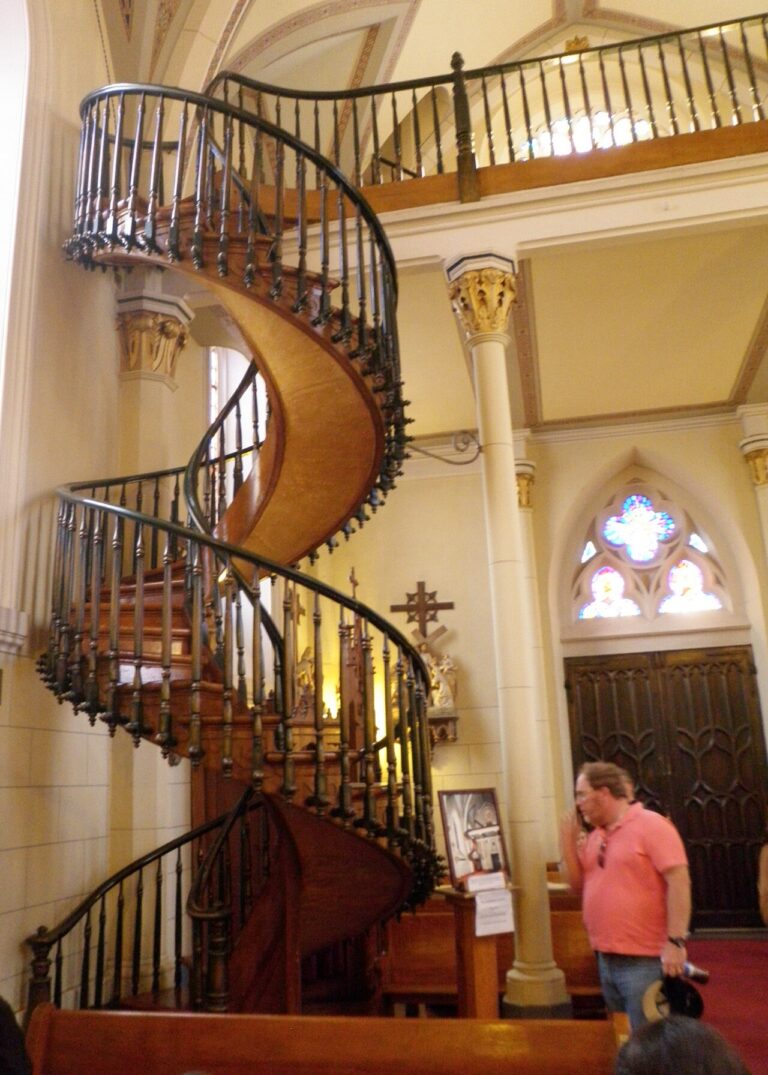
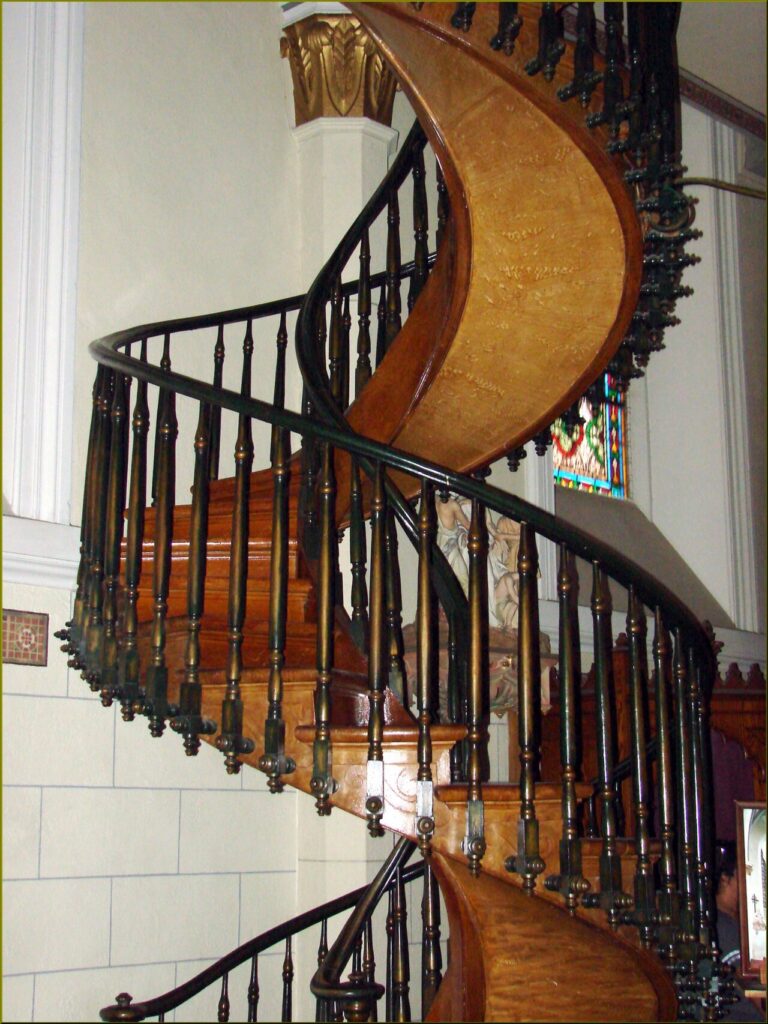
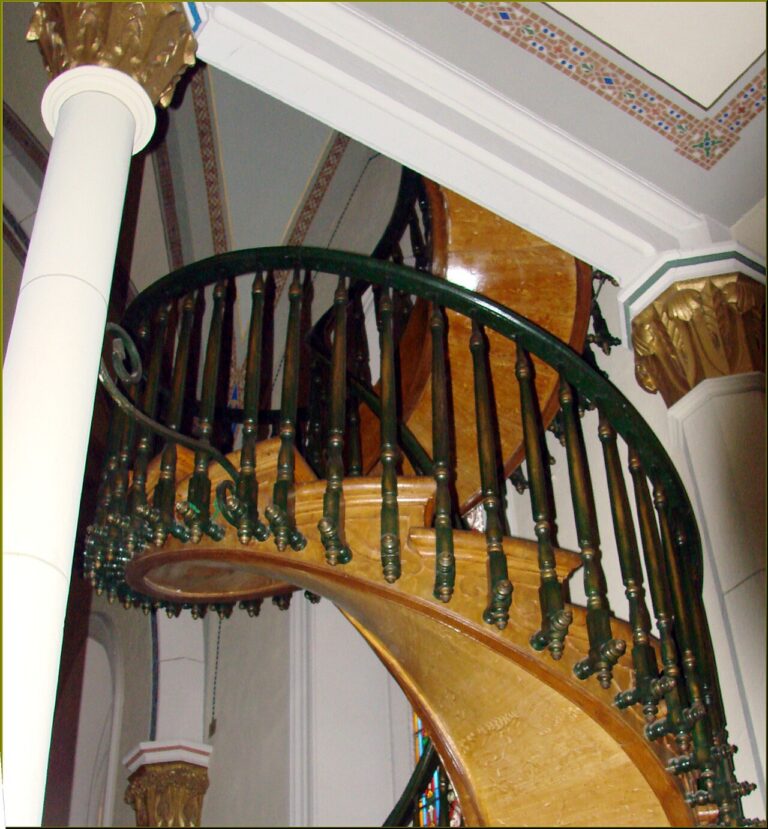
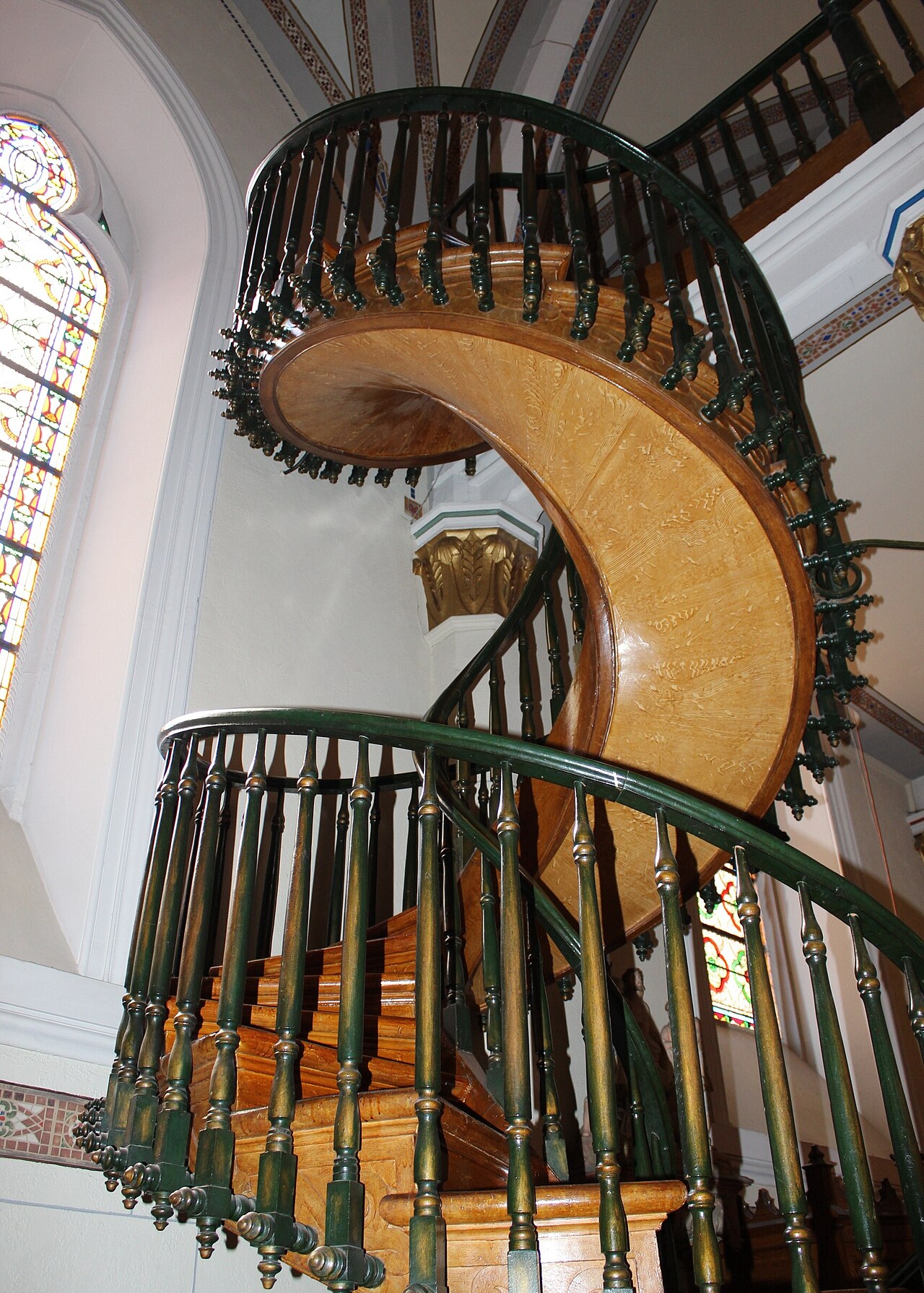
Image above: the underside of the Loretto helix, with no central pole. Credit: MARELBU, CC BY 3.0 via Wikimedia Commons.
Three ways to skip the centre pole
- Helical stringer
- Curved side beams act as one stiff helix (Loretto)
- Cantilever
- Treads built into a wall, each bearing on the one below
- Spine or mono-stringer
- One hidden steel or concrete beam carries every tread
- Common materials
- Wood, stone, steel, reinforced concrete
- Typical behaviour
- Some springiness under load
- Needs
- Precise geometry and solid anchor points
People searching for an “unsupported staircase” usually mean a spiral with nothing down the middle. The Loretto Chapel stair is the famous example. Such stairs are not unsupported: their support is simply not where you expect it. This page explains the main methods in plain terms.
What a centre pole normally does
In a conventional spiral stair, every tread is fixed to a central post, the newel. Weight on a step travels into the post and straight down to the floor. The post is simple and strong, which is why most spiral stairs have one. Remove it and the load needs another route to the ground.
Method 1: helical stringers
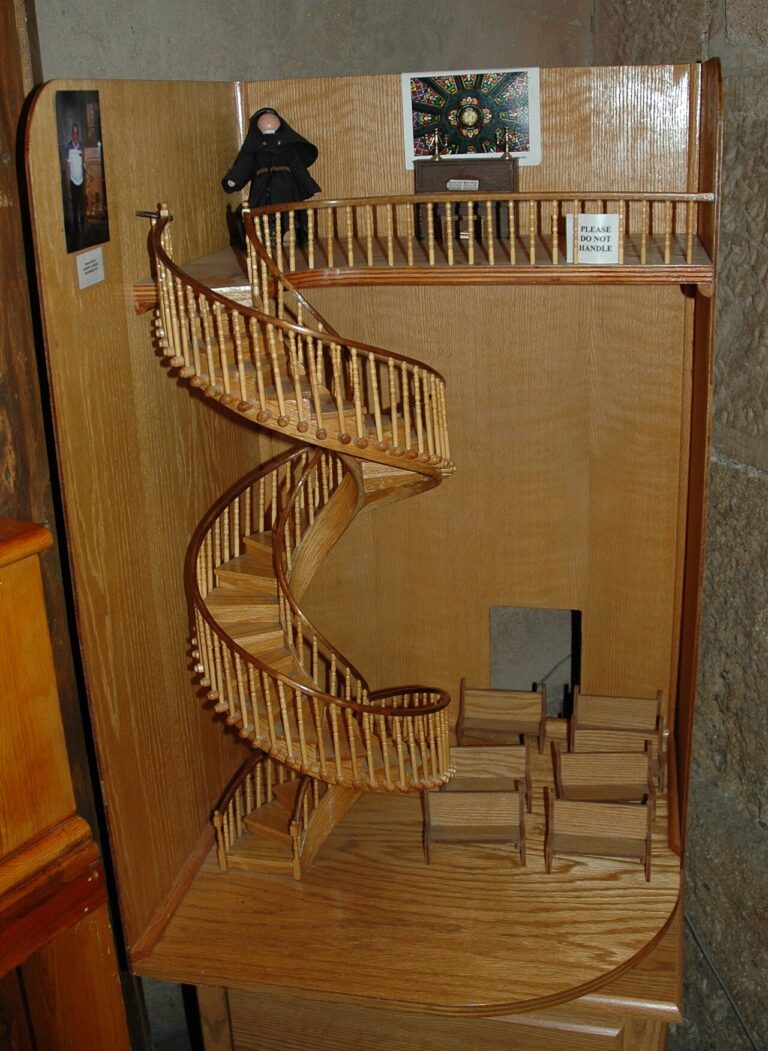
Two continuous curved beams, the stringers, run up the inside and outside edges of the steps. Every tread is fixed to both, so the whole stair behaves as one twisted beam, a helix, fixed at the bottom and the top. Weight on any step is shared around the curve and carried to those two anchor points. The tighter the inner stringer is wound, the more it acts like a post.
This is how the Loretto staircase works. Its inner stringer has a radius of about one foot, which wood technologist Forrest Easley said “functions as an almost solid pole” (Easley, 1997). Modern helical stairs use the same principle in steel or reinforced concrete. See how the Loretto staircase works.
Method 2: cantilevered treads
In older stone stairs, each tread is built into the surrounding wall at one end and rests on the edge of the tread below. The steps lock together so the stair carries itself with an open well in the middle. These are often called geometric or cantilevered stairs. The Tulip Stairs at the Queen’s House, Greenwich, from the 1630s, are a well-known early example. See staircases like Loretto’s.
Method 3: a hidden spine
Many modern “floating” stairs hide a single steel or concrete beam under the treads or inside a wall. The treads look free, but each is bolted or welded to the spine. These are more often straight than spiral, and they rely on modern materials and calculations.
Why these stairs feel springy
A helix under load flexes a little, like a coil. Visitors to the Loretto stair reported some springiness, and an iron bracket tying it to a nearby column was added in 1887 along with the railings (Wikipedia). Springiness is normal for this kind of structure. It does not mean it is unsafe, but it is one reason long helical stairs are now designed by engineers.
| Method | Where the load goes | Example |
|---|---|---|
| Helical stringers | Around the helix to anchors at floor and top | Loretto Chapel, Santa Fe |
| Cantilevered treads | Into the wall and down through the steps below | Tulip Stairs, Greenwich |
| Hidden spine | Into one steel or concrete beam | Modern “floating” stairs |
Quick answers
How can a spiral staircase stand without a center pole?
Something else carries the load: curved stringers acting as one helix, treads built into a wall, or a hidden steel or concrete spine.
Is the Loretto staircase unsupported?
No. Its two helical stringers are anchored at the floor and loft, the tight inner stringer acts much like a pole, and an iron bracket was added in 1887.
What is a cantilevered staircase?
A stair whose treads are built into a wall at one end, with each step resting on the one below, leaving the middle open.
Are spiral staircases without a center pole safe?
When properly designed and built, yes. They often flex slightly, which is normal for the structure.
Can you build a spiral staircase without a center pole today?
Yes. Specialist stair builders make helical stairs in wood, steel and concrete, usually with engineering calculations.
Sources
- Forrest N. Easley, “A Stairway from Heaven?”, Feb 1997.
- Wikipedia, “Loretto Chapel”.
- Royal Museums Greenwich, the Queen’s House and Tulip Stairs.
Keep exploring
- How the Loretto staircase works
- Staircases like Loretto’s
- Could you build it today?
- The Loretto staircase overview
Researched & fact-checked by the Loretto Volunteers Editorial Team
Loretto Volunteers is an independent research project documenting the history, architecture, and enduring mystery of the Loretto Chapel staircase. We work from primary and archival sources and show our evidence. Last reviewed: June 2026.